
In high-pressure oil transfer operations—such as those at coastal oil terminals, offshore oil platforms, and seaside oil depots—flexible connection segments within high-pressure pipelines are constantly exposed to harsh marine environments characterized by high salt-mist concentrations and frequent seawater splashing. Standard, land-based rubber oil hoses are ill-suited for these conditions; their outer layers rapidly degrade due to salt-mist exposure, while their inner layers suffer dual corrosion from seawater and crude oil. This not only creates safety risks—such as potential leaks—but also leads to high maintenance costs and operational downtime caused by the frequent need for hose replacement. Specialized, seawater-resistant rubber hoses designed for high-pressure oil pipelines address these challenges by combining oil resistance (for crude oil transport) with resistance to seawater corrosion. These hoses serve as highly reliable flexible components, ensuring the continuous and safe operation of high-pressure oil transfer systems in marine environments.
News
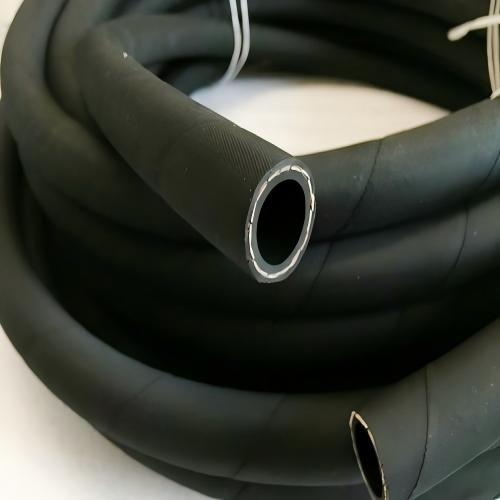
Seawater-corrosion-resistant rubber hoses for high-pressure oil pipelines
Dual-modified inner lining: resistant to both crude oil and seawater
The inner linings of standard oil hoses are optimized solely for crude oil and do not account for the corrosive effects of seawater. If a leak occurs or seawater enters the pipeline, these linings rapidly degrade under the combined attack of crude oil and chloride ions—leading to swelling and a sharp decline in mechanical properties—rendering them incapable of long-term, stable service in marine environments. The inner lining of this specialized high-pressure hose utilizes a unique nitrile rubber (NBR) formulation, modified to provide dual resistance against both oil and seawater, effectively balancing the requirements for transporting high-pressure crude oil with the need to withstand chloride-induced corrosion.
The base material of the inner lining consists of high-acrylonitrile-content nitrile rubber, which offers exceptional resistance to mineral oils. When in prolonged contact with various types of crude oil or refined petroleum products, the material exhibits minimal swelling or weight gain, and its tensile strength and elasticity remain stable. Furthermore, the lining is highly resistant to rapid wear or localized damage, even under the continuous, high-pressure flow of oil. During the rubber compounding and modification phase, functional components resistant to seawater corrosion are purposefully incorporated, and the molecular chains of the nitrile rubber are optimized through saturation. This significantly enhances the liner’s resistance to chloride ion erosion. Even if a substantial amount of seawater were to accidentally enter the oil pipeline and remain in prolonged contact with the liner, the material would not suffer from the rapid oxidative degradation caused by chloride ions—a common issue with standard oil-resistant rubber.
The liner is produced using an integrated, one-piece extrusion process, ensuring a seamless structure throughout. This completely eliminates the risk of crude oil or seawater penetrating the inner layers through localized weak points. The liner thickness is determined through precise mechanical and corrosion-allowance calculations, incorporating a substantial dual-layer safety margin. This ensures the liner maintains its structural integrity over the long term, even when subjected to the combined, persistent erosive effects of crude oil and seawater, preventing premature failure due to corrosion-induced perforation. Furthermore, the electrical conductivity of the liner has been specifically optimized to meet the anti-static requirements for oil-transfer hoses. Static electricity generated by the high-speed flow of crude oil can be safely dissipated, preventing the accumulation and discharge of static charges—a critical safety hazard that could otherwise trigger oil-gas explosions—thereby fully complying with safety standards for petroleum transport operations.
High-Pressure, Corrosion-Resistant Composite Reinforcement Structure: Ensuring Long-Term Stability Under Marine Operating Conditions
High-pressure oil pipelines typically operate within a pressure range of 1.6 MPa to 10 MPa, with some ultra-high-pressure applications requiring even higher ratings. The reinforcement structures found in standard large-diameter water hoses are entirely incapable of withstanding such high internal pressures, making them prone to severe failures, such as wall bulging or catastrophic ruptures. Moreover, in marine environments, high levels of salt spray can penetrate the reinforcement layer, rapidly causing carbon steel wires to corrode. The resulting expansion of rust deposits can crack the hose wall from within, leading to premature failure. The reinforcement layer of this high-pressure oil-transfer hose utilizes a corrosion-resistant composite structure, which combines high load-bearing capacity with full compatibility for marine corrosive environments. The reinforcement layer utilizes a structure of multiple, crisscrossed layers of high-strength, high-toughness steel wire. These wires are arranged at a balanced, bidirectional angle, strictly adhering to the manufacturing standards for high-pressure hydraulic hoses. The rated working pressures across various hose diameters cover the full operational range required for oil transmission pipelines. With a burst pressure exceeding four times the rated working pressure, the hoses offer a substantial safety margin, effectively withstanding water hammer effects and transient peak pressures during high-pressure oil transport, thereby eliminating the risk of sudden, catastrophic hose rupture. All load-bearing steel wires undergo a marine-grade passivation treatment, creating a dense, corrosion-resistant protective film on their surfaces. This significantly reduces the likelihood of electrochemical corrosion; even if a small amount of corrosive medium penetrates the reinforcement layer, it will not lead to rapid, widespread corrosion or wire breakage.
Between the layers of steel wire, specialized oil- and seawater-resistant rubber isolation layers are incorporated. These prevent direct contact and friction between adjacent wires—mitigating wear and potential wire breakage caused by high-pressure, pulsating loads—while also acting as a barrier that hinders the ingress of corrosive media into the reinforcement structure, effectively lengthening the path that such agents must travel to reach the core steel wire layers. The winding tension of the reinforcement layer is precisely calibrated using fully computerized numerical control (CNC) equipment, ensuring uniform stress distribution across every layer of wire. This prevents localized stress concentrations that could otherwise lead to premature fatigue failure. Consequently, under the long-term pulsating loads characteristic of high-pressure oil transport, the fatigue life of this reinforcement structure far exceeds that of conventional braided oil hoses. The entire reinforcement assembly has undergone tens of thousands of high-pressure pulse cycle tests. Furthermore, following accelerated salt-spray corrosion testing—designed to simulate a marine environment—the overall mechanical properties of the reinforcement structure remain at over 90% of their original design specifications, fully meeting the long-term operational requirements for high-pressure oil transmission pipelines. Specially engineered for all marine operating conditions, this solution ensures safety and cost-efficiency throughout the entire lifecycle of oil transfer systems. High-pressure oil transfer operations at coastal terminals and offshore production platforms are inherently high-risk; the installation and maintenance of hoses are subject to stringent safety protocols. A sudden hose failure could not only halt operations entirely but also trigger major safety and environmental incidents, such as crude oil spills, fires, or explosions. This seawater-resistant, high-pressure rubber hose has been optimized for marine environments—from its outer protective layer to its end-fitting assemblies—establishing a highly reliable, flexible conduit for high-pressure oil transfer.
The outermost rubber layer is crafted from a specially modified compound that is resistant to oil, seawater, and UV-induced weathering. Even when exposed for long periods to the harsh, high-salinity, and intense UV conditions of an open marine environment, the material remains durable, resisting surface chalking and cracking. It also withstands exposure to crude oil splashes, ensuring the hose does not swell or degrade upon contact with accidental spills. Furthermore, the volume resistivity of the outer layer is strictly maintained within a safe, anti-static range, eliminating the risk of static electricity accumulation and significantly enhancing the inherent safety of marine oil transfer operations.
The end fittings are constructed from marine-grade stainless steel or high-strength, corrosion-resistant passivated alloys, designed to integrate seamlessly with standard flanges or quick-connect couplings used in high-pressure oil pipelines. A high-precision, CNC-controlled integrated crimping process secures the fittings to the hose; the internal interlocking structure embeds firmly into the steel-wire reinforcement, creating a rigid, unified assembly. This design completely eliminates the risk of the hose detaching from the fitting under the full-load stresses of high-pressure operation. Additionally, the internal sealing system utilizes specialized components compatible with both crude oil and seawater, ensuring long-term, leak-free performance even under the complex and demanding conditions of the marine environment. Before leaving the factory, every hose assembly undergoes rigorous testing—including individual ultra-high-pressure hold tests, electrostatic property verification, and airtightness checks—ensuring full compliance with safety standards for petroleum transport. Once delivered, these assemblies are ready for immediate deployment in offshore oil-handling operations.
In practical applications, these hoses are ideally suited for a wide range of high-pressure oil-transfer scenarios. When used as flexible components for loading arms at coastal oil terminals, they withstand the constant motion caused by vessel movement while resisting degradation from marine salt spray; their high reliability extends their service life, significantly reducing the frequency of hazardous replacement operations at the terminal. On offshore oil platforms, these high-pressure hoses—designed for crude oil export—remain stable despite long-term exposure to seawater, effectively preventing the critical safety risks associated with sudden leaks in offshore pipeline systems. Furthermore, when utilized as flexible compensation segments in high-pressure pipelines at coastal tank farms, they absorb displacement stresses caused by the thermal expansion and contraction of rigid piping, while simultaneously resisting coastal corrosion to ensure the continuous, stable operation of the facility’s oil-transfer system.
For operators in the offshore high-pressure oil-transfer sector, adopting these seawater-resistant rubber hoses offers significant advantages: it enhances operational safety, mitigates the risk of environmental and safety incidents caused by crude oil leaks, and extends the replacement cycle. This reduces both the high maintenance costs associated with replacing hoses in hazardous offshore environments and the losses incurred from operational downtime, ultimately providing a highly reliable solution for flexible fluid transport in offshore high-pressure oil-transfer systems.