
In extreme operating environments—such as those involving heavy-duty hydraulic presses, large-scale construction machinery, or ultra-high-pressure power transmission in mining—conventional hydraulic hoses are often limited to pressure ranges below several tens of megapascals (MPa). When subjected to ultra-high pressures reaching the 70 MPa level, standard rubber hoses are prone to failure: the reinforcement structure may experience uneven loading, leading to bursts, or the hose may suffer from insufficient pulse fatigue life. Such failures not only cause sudden hydraulic system breakdowns but also pose severe safety risks, as high-pressure hydraulic fluid can spray out violently. Designed specifically for the mechanical demands of ultra-high-pressure applications, this hydraulic hose features a six-layer steel-wire-wound reinforcement structure. It provides stable, reliable pressure resistance at the 70 MPa level, offering a highly dependable flexible transmission solution for extreme, ultra-high-pressure hydraulic systems.
News
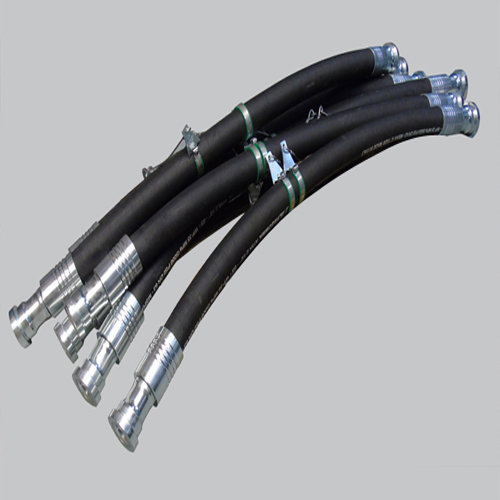
Hydraulic hose with six-layer steel wire reinforcement, designed for 70 MPa ultra-high-pressure hydr
Six-Layer Interwoven Steel-Wire Reinforcement for Uniform 70 MPa Pressure Support
Most standard high-pressure hydraulic hoses utilize a 2–4 layer steel-wire braided or wound structure, which typically cannot withstand pressures exceeding 40 MPa. Under 70 MPa loads, these hoses are highly susceptible to structural overload and localized stress concentrations, which often result in catastrophic bursts. The core reinforcement of this ultra-high-pressure hose consists of six layers of high-strength, high-toughness specialty steel wire, arranged in a three-dimensional, bi-directional, interwoven pattern at balanced angles. This mechanical architecture ensures stable, consistent pressure resistance at the 70 MPa level.
The six layers of steel wire are organized into three sets of bi-directional wound layers. Within each set, the two layers are spirally arranged in opposite directions at precisely calculated, balanced angles. The winding angles of adjacent layers have been optimized through rigorous mechanical simulation, ensuring that every layer of steel wire shares the 70 MPa internal pressure load uniformly. This effectively eliminates the uneven stress distribution common in conventional multi-layer hoses—where inner layers are often overloaded while outer layers remain underutilized. The specialized, high-tensile-strength steel wire used undergoes a dedicated strengthening and toughening treatment. This ensures exceptionally high tensile strength while maintaining superior impact and fatigue resistance, effectively preventing brittle fracture of the wires under the repetitive, ultra-high-pressure pulse loads. The six-layer steel wire reinforcement forms a cohesive, quasi-rigid load-bearing cylinder. The hose achieves a stable rated working pressure of 70 MPa and a burst pressure exceeding 210 MPa—far surpassing the performance limits of conventional hydraulic hoses and fully meeting the rigorous pressure-bearing requirements of ultra-high-pressure hydraulic systems.
Unlike some products on the market that simply stack additional steel wire layers without optimizing their winding angles, this hose utilizes a high-precision CNC winding process. The density and tension of each wire layer are controlled within micron-level tolerances, ensuring uniform spacing between layers and eliminating potential structural weaknesses caused by uneven wire distribution. In long-duration pressure-retention tests at the 70 MPa rated pressure, the hose exhibits an outer diameter expansion rate well below industry standards. It remains free from abnormal bulging or excessive deformation under ultra-high pressure, significantly enhancing the pressure transmission stability of the hydraulic system.
Composite rubber layers adapted for high and low temperatures ensure long-term stability under ultra-high-pressure conditions.
Ultra-high-pressure hydraulic systems (70 MPa class) are often subject to drastic temperature fluctuations—ranging from heat generated by high-velocity hydraulic fluid flow to the effects of extreme cold in outdoor environments—all of which test the material stability of the hose’s rubber layers. Both the inner and outer rubber layers of this hose are specifically optimized for ultra-high-pressure service; they maintain structural integrity even in extreme temperatures, avoiding the performance failures common in standard rubber materials under such demanding conditions.
The inner rubber layer features a modified nitrile rubber (NBR) compound engineered to withstand ultra-high-pressure pulses. Through a specialized cross-linking process, the material retains consistent elasticity and mechanical strength across a broad temperature range, from -40°C to 120°C. Under an ultra-high-pressure load of 70 MPa, the inner rubber layer remains resistant to "rubber seepage"—a phenomenon where high-pressure hydraulic fluid is forced into the minute gaps within the steel wire reinforcement. Furthermore, it does not suffer from swelling, degradation, or a decline in mechanical properties after prolonged exposure to hydraulic fluid. It consistently maintains its sealing integrity, preventing high-pressure fluid from permeating the inner layer and corroding the steel wire skeleton. The thickness of the inner rubber layer is precisely engineered: it is thick enough to eliminate the risk of fluid leakage, yet thin enough to preserve the overall flexibility of the hose, striking an optimal balance between ultra-high-pressure sealing performance and bending capability.
A specialized high-pressure-resistant synthetic rubber isolation layer is positioned between adjacent steel wire layers. This prevents direct contact and friction between the wires—which could otherwise lead to wear or wire breakage under repeated pressure pulses—while also optimizing the stress distribution across the six-layer steel wire reinforcement. It absorbs minor differential deformations between the layers, preventing stress concentrations that could cause premature structural failure. The outer rubber cover is composed of a specially modified, wear-resistant, and weather-resistant compound that also withstands hydraulic fluid splashes. Designed for the demanding conditions of ultra-high-pressure hydraulic systems, it provides robust protection against mechanical abrasion, UV-induced aging, and chemical corrosion. It remains durable over long-term service, free from cracking or delamination, thereby safeguarding the internal six-layer steel wire reinforcement from environmental exposure, rust, and performance degradation. The entire composite rubber structure has undergone rigorous ultra-high-pressure temperature cycling tests in accordance with API standards; it maintains its structural integrity even after hundreds of high- and low-temperature shock cycles at 70 MPa, with no risk of leakage or blistering.
Specialized ultra-high-pressure crimped hose assemblies, engineered for extreme operating conditions.
In 70 MPa ultra-high-pressure applications, more than 80% of potential hose failures occur at the connection points. Standard hydraulic fittings lack the connection strength and sealing performance required for such extreme loads, posing a high risk of catastrophic failures, such as the hose detaching from the fitting or the seal being compromised. This six-layer steel-wire-reinforced ultra-high-pressure hose is paired with a dedicated 70 MPa-rated coupling assembly, structurally eliminating the risk of failure at the connection point.
The couplings are forged from high-strength alloy and undergo rigorous heat treatment to ensure superior mechanical integrity. Being seamless—with no welded joints—they completely avoid the risk of weld cracking under ultra-high pressure. Internally, the coupling features a multi-stage, graduated barbed design. Through a high-precision CNC swaging process, these barbs are embedded directly into the innermost steel-wire reinforcement layer of the hose, creating a rigid, integrated bond. This ensures that, even under a 70 MPa load, there is zero risk of the hose pulling out of the coupling. The sealing system utilizes a specialized ultra-high-pressure composite seal, which maintains consistent sealing pressure across a wide temperature range. This prevents the "seal extrusion" common with standard O-rings—where the seal is forced into the clearance gap under 70 MPa pressure—thereby eliminating the safety hazard of high-pressure fluid spraying from the connection point.
Before leaving the factory, every hose assembly undergoes a pressure-retention test at 1.5 times its rated working pressure (105 MPa) and is subjected to ultra-high-pressure impulse fatigue testing. This guarantees that every delivered unit is fully capable of handling 70 MPa ultra-high-pressure operating conditions. In practical applications, this hose is ideally suited for a variety of extreme, ultra-high-pressure hydraulic systems: it reliably handles the 70 MPa loads found in the power transmission circuits of 10,000-ton-class hydraulic presses; it withstands the frequent pressure surges in the hydraulic support circuits of large-scale mining equipment, offering an impulse fatigue life far exceeding that of standard high-pressure hoses; and it maintains a stable 70 MPa pressure-bearing capacity even when subjected to complex bending conditions in the high-tonnage hydraulic cylinder circuits of heavy construction machinery. For users of ultra-high-pressure hydraulic systems, selecting this specialized 70 MPa hydraulic hose—reinforced with six layers of spiraled steel wire—not only eliminates the critical safety risk of hose bursts under ultra-high-pressure conditions, but also significantly enhances the continuous operational stability of the entire hydraulic system. Furthermore, it helps minimize production downtime caused by sudden hose failures, establishing a highly reliable, flexible power transmission safeguard for 70 MPa-class ultra-high-pressure hydraulic systems.