
In environments characterized by extreme abrasion—such as the transport of tailings in metal mines, the dredging of hard aggregates, or the pneumatic conveying of highly abrasive materials—standard wear-resistant rubber hoses often have a service life of only a few months. Frequent replacements not only incur significant procurement costs but also lead to repeated, unplanned production line downtime, driving up overall operational expenses. Designed specifically for high-abrasion applications, these long-service-life UPE (Ultra-High Molecular Weight Polyethylene) hoses leverage the exceptional wear resistance of UPE. Through comprehensive optimization—encompassing material formulation, structural design, and process control—they extend service life to several times that of conventional wear-resistant hoses, providing a durable and stable solution for fluid transport in highly abrasive environments.
News
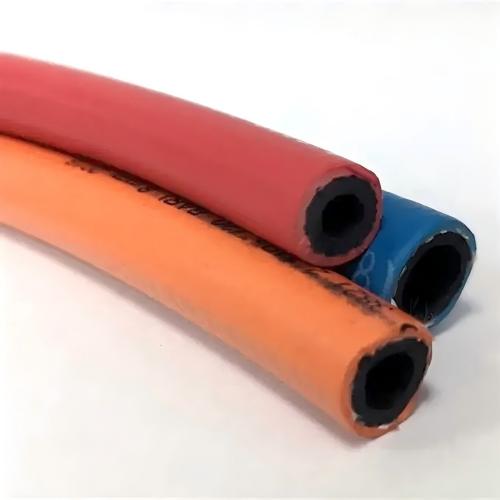
UPE Wear-Resistant Conveyor Hoses with Long Service Life for High-Abrasion Applications
Highly oriented, modified UPE liners push the boundaries of wear resistance at the material level.
While standard UPE inherently offers good wear resistance, there remains significant room for improvement when faced with the continuous, high-velocity erosion caused by a high volume of sharp, hard particles. The core liner of this long-life hose utilizes a targeted molecular modification process to elevate the material's resistance to particle-induced cutting, effectively breaking through the traditional limits of wear-related service life.
During the polymerization of the UPE, the orientation of its ultra-long molecular chains is precisely controlled to create a dense, highly ordered structure aligned with the tangential direction of the pipe wall. When sharp, hard particles strike the wall at high speeds, these oriented, ultra-long molecular chains undergo minute elastic deformations, rapidly absorbing the impact energy. This significantly reduces the cutting force exerted by the particles on the pipe wall, preventing the localized molecular chain severance—a common failure mode in standard UPE materials with randomly oriented molecular chains. During the modification process, specialized wear-resistant functional components—highly compatible with the UPE matrix—are uniformly incorporated. This enhances the scratch and erosion resistance of the liner surface without compromising the material's overall toughness. In extreme, high-abrasion operating conditions, the service life of this liner is more than eight times that of standard wear-resistant rubber hoses and two to three times that of conventional, unmodified UPE hoses.
Unlike some products on the market that merely increase liner thickness to extend service life, this hose’s modified UPE liner combines extreme wear resistance with an exceptionally low coefficient of friction and superior chemical inertness. Hard particles struggle to adhere to or form scale on the inner surface; consequently, the flow cross-section remains stable over long-term use, ensuring consistent flow resistance and preventing the rapid decline in flow rate often seen in standard thick-walled, wear-resistant hoses. Furthermore, the modified liner withstands the vast majority of strong acids, alkalis, and corrosive media. Even under extreme, combined "high-abrasion and high-corrosion" conditions, the liner remains resistant to chemical degradation—which would otherwise accelerate wear—thereby ensuring long-lasting, stable performance in both wear and corrosion resistance.
Gradient Composite Reinforcement Structure: Preventing Premature Structural Failure Throughout the Entire Lifecycle
In extreme, high-abrasion environments, enhancing the wear resistance of the liner alone is insufficient to achieve an ultra-long service life; if the intermediate reinforcement or the outer protective layer fails prematurely, the entire hose will fall short of its intended design lifespan. This long-life UPE hose utilizes a gradient composite reinforcement structure, ensuring that every layer delivers long-term durability. This design effectively eliminates the risk of localized structural failure compromising the service life of the entire hose. On the exterior of the modified UPE liner, a specialized, corrosion-resistant transition adhesive layer is applied, perfectly contoured to the liner. Through a proprietary surface activation process, a high-strength, molecular-level bond is created between the UPE liner and the outer structural layers. This effectively eliminates the risk of delamination or separation—a common issue that can occur under long-term pressurized transport or repeated bending. The intermediate reinforcement layer utilizes a gradient-load structure, consisting of multiple layers of high-toughness, high-strength steel wire wound in an interlaced pattern. By applying differentiated tension control to each layer, the load is distributed uniformly across the entire framework. This prevents localized stress concentrations and premature fatigue fractures in the steel wires, even when subjected to the high-frequency pressure pulses typical of pumping operations in high-abrasion environments. Consequently, the pulse-fatigue resistance of this framework is more than three times that of standard wear-resistant industrial hoses.
The outer cover is composed of an ultra-thick, highly abrasion-resistant rubber compound, specifically engineered for demanding, high-wear conditions. Its wear resistance far exceeds that of conventional hose materials, allowing it to withstand severe scraping against rough, rocky terrain during field deployment or frequent relocation—preventing the rapid wear-through that would otherwise expose the internal steel wire reinforcement. Furthermore, the outer cover exhibits exceptional weather and aging resistance; it will not crack, chalk, or flake, even when exposed to complex, long-term outdoor environments. It serves as a robust, comprehensive protective barrier for the internal UPE liner and the steel wire framework. This integrated, gradient-composite structure has been validated through thousands of cycles of high/low-temperature fluctuations and pressure-pulse testing. Throughout its entire design lifecycle, the hose is immune to non-abrasion-related premature failures—such as corrosion of the reinforcement, interlayer delamination, or fragmentation of the outer cover. As a result, the actual service life of the hose is determined solely by the natural wear rate of the UPE liner, ensuring long-term, stable, and reliable operation over its entire intended lifespan. Optimizing Total Life-Cycle Costs: Achieving Comprehensive Cost Reduction and Efficiency in High-Abrasion Environments
For operators in high-abrasion environments, the total cost of a pipeline system extends far beyond the initial purchase price. The losses incurred from operational downtime, labor-intensive maintenance, and safety risks—all stemming from frequent hose replacements—often dwarf the actual cost of the hoses themselves. This long-service-life UPE (Ultra-High Molecular Weight Polyethylene) abrasion-resistant hose offers a service life several times longer than conventional products, delivering genuine cost reduction and efficiency gains across the entire life cycle.
In long-distance transport of high-hardness tailings at metal mines, standard abrasion-resistant hoses previously required complete replacement every 3–6 months. Such replacements demand significant labor and material resources, while also forcing the tailings transport system into prolonged downtime—directly disrupting the mine’s overall production schedule. By switching to this long-life UPE abrasion-resistant hose, the service life of the pipeline can be extended to 2–3 years. This drastically reduces the frequency of replacements and eliminates production losses caused by unplanned downtime. Similarly, in dredging operations involving the transport of high-sediment slurries—where high-velocity sand and gravel particles typically wear out standard hoses in less than six months—this long-life hose can extend the service cycle to several years. This minimizes the cumbersome process of replacing hoses mid-project, thereby enhancing overall operational efficiency.
Furthermore, this long-life design significantly mitigates safety and environmental risks in high-abrasion settings. Previously, as hoses neared the end of their service life—worn to the point of near-puncture—they were prone to sudden leaks, potentially spilling corrosive mineral slurries or high-concentration mud and causing environmental contamination. With a significantly extended service life and long-term operational stability, the system now allows maintenance personnel to use periodic non-destructive thickness testing to precisely monitor the remaining wear margin of the UPE liner. This enables proactive planning for replacements, effectively eliminating the safety and environmental hazards associated with unexpected leaks. For industrial users operating under conditions of extreme, high-abrasion wear, selecting this long-service-life UPE (Ultra-High Molecular Weight Polyethylene) wear-resistant conveyor hose may entail a slightly higher initial procurement cost compared to standard wear-resistant hoses. However, when amortized over its entire multi-year lifecycle, the annual procurement cost is significantly lower than that of conventional products. Furthermore, when accounting for the implicit benefits—such as reduced downtime, lower labor requirements for operation and maintenance, and the mitigation of safety and environmental risks—the overall economic and operational advantages become substantial. As industries characterized by high-abrasion processes increasingly demand continuous, stable production, these specialized, long-service-life wear-resistant hoses are progressively replacing traditional, short-lived alternatives, establishing durable, low-maintenance fluid transport systems for even the most demanding, high-wear environments.