
In high-pressure oil drilling and production operations—such as hydraulic fracturing, well cementing, and fluid transport at the wellhead—pressures remain consistently high. Standard low-pressure hoses are entirely inadequate for such extreme conditions; any hose rupture or leakage would not only disrupt operations but could also trigger major safety incidents, including the high-pressure ejection of fluids or severe equipment damage. The 6SP hose—a six-layer, steel-wire-wound, 70 MPa-rated API oilfield hose—is developed and manufactured in strict accordance with API (American Petroleum Institute) standards. Featuring a six-layer, high-strength steel-wire-wound structure, it achieves an ultra-high pressure rating of 70 MPa, serving as a critical component for ensuring safe fluid transport in high-pressure oil drilling and production environments.
News
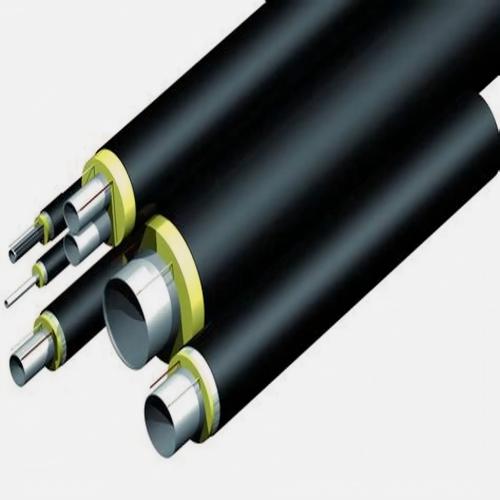
6SP Six-Layer Steel-Wire-Wound 70 MPa Pressure-Rated API Petroleum Drilling and Production Hose
Six-Layer Interwoven Steel-Wire-Wound Framework for 70 MPa Ultra-High Pressure Resistance
Unlike the load-bearing mechanics of traditional steel-wire-braided hoses, the 6SP hose utilizes a six-layer, steel-wire-wound structure specifically engineered for the stress characteristics of ultra-high-pressure applications. This design surpasses the pressure limits of conventional hoses, providing a stable, 70 MPa-rated load-bearing capacity.
Six layers of high-strength, high-tensile steel wire are wound in alternating directions—with each layer oriented opposite to the next—creating a three-dimensional support network that balances forces and ensures uniform stress distribution. When the 70 MPa pressurized fluid exerts radial force against the hose wall, the six layers of steel wire distribute the load across the entire structure. This prevents the localized stress concentrations common in single- or double-layer braided designs, ensuring that the hose maintains a highly consistent pressure-bearing capacity along its entire length, with no weak points. This winding configuration offers significantly higher burst resistance than braided structures using an equivalent amount of steel wire; the actual burst pressure far exceeds the 70 MPa rated working pressure, providing a safety margin that fully meets the rigorous requirements of high-risk oil drilling and production operations. A high-strength synthetic fiber buffer layer is positioned between each pair of steel wire layers. This prevents wear and wire breakage caused by direct contact and friction between adjacent steel wire layers, while also optimizing the overall stress distribution, ensuring that high-pressure loads are transmitted more uniformly across every individual wire. This design significantly enhances the hose's resistance to impulse fatigue; it can withstand hundreds of thousands of pressure cycles—even under the frequent, rapid pressure fluctuations typical of oil drilling and extraction operations—without the steel wires suffering from fatigue-induced fractures. It is perfectly suited for extreme, high-frequency, high-pressure impulse conditions, such as hydraulic fracturing. The entire wire-reinforced framework has been optimized through rigorous mechanical simulation, allowing for ultra-high pressure capacity while maintaining a reasonable bend radius. This ensures flexible routing within the complex equipment layouts of drilling and extraction sites, avoiding the installation limitations often encountered with rigid high-pressure piping.
API-standard composite material system, tailored for complex media and operating conditions in drilling and extraction.
The fluids transported in oil drilling and extraction environments are often complex, consisting of substances such as crude oil, fracturing fluids, and corrosive, sand-laden mixtures. These are compounded by high-pressure and high-abrasion conditions. This hose strictly adheres to API standards for petroleum-industry hoses; through targeted material optimization across every layer, it ensures long-term performance in demanding drilling and extraction environments.
The inner rubber layer—which comes into direct contact with high-pressure media—is composed of a specially modified rubber that is resistant to oil, abrasion, and acid/alkali corrosion. By increasing the cross-link density and compactness of the rubber molecules, the material can withstand long-term exposure to crude oil and various fracturing additives, preventing swelling or degradation. Furthermore, it effectively resists high-velocity erosion from solid particles, such as the quartz sand carried within fracturing fluids. This significantly extends the wear life of the inner rubber layer, eliminating the risk of localized, rapid wear-through. The thickened inner rubber layer provides a substantial safety margin for high-pressure operations. Even under pressures as high as 70 MPa, highly penetrative oil and gas media are effectively prevented from rapidly permeating the inner rubber to reach the internal steel-wire reinforcement. This fundamentally eliminates the risk of steel-wire corrosion and rust caused by media permeation.
The outer rubber layer is composed of a specially modified material engineered for weather resistance, wear resistance, and durability against the harsh, complex environments of oilfields. In outdoor drilling and production sites, it withstands long-term erosion from wind-blown sand and frequent mechanical abrasion. It also resists exposure to crude oil, ozone-induced aging, and intense ultraviolet radiation. Even after prolonged use, the outer layer remains free from cracking, chalking, or flaking, providing comprehensive protection for the internal six-layer steel-wire reinforcement and preventing the structural degradation or corrosion that would occur if the reinforcement were exposed to such demanding conditions. High-strength, specialized adhesives—meeting API standards—are used to bond the inner and outer rubber layers to the steel-wire reinforcement. This ensures that the layers remain firmly integrated, even under the stress of long-term, ultra-high-pressure deformation and fluctuating temperatures, maintaining the structural integrity of the entire hose assembly.
Integrated explosion-proof coupling assembly, fully compliant with drilling and production safety standards.
More than 80% of safety incidents in high-pressure oil drilling and production occur at connection points. The integrated coupling assembly designed for this 6SP hose strictly adheres to API high-pressure connection standards. It effectively resolves issues such as leakage and hose detachment under 70 MPa ultra-high-pressure conditions, making it suitable for a wide range of critical drilling and production operations.
The accompanying high-pressure couplings are precision-forged from high-strength alloy. They feature an internal, multi-layered barbed design engineered to interface precisely with the six-layer steel-wire reinforcement. During the high-precision CNC swaging process, these barbs embed themselves into the gaps between the steel-wire layers, creating a rigid mechanical bond between the coupling and the reinforcement structure. This completely eliminates the risk of catastrophic failure—such as the hose being forcibly pulled out of the coupling—under 70 MPa of pressure. The multi-stage sealing steps within the coupling fit perfectly against the thickened inner rubber layer, creating a robust, multi-layered high-pressure sealing structure. This ensures that no leakage occurs at the connection interface, even when subjected to long-term erosion from high-pressure, sand-laden fluids. Every crimped hose assembly must undergo a prolonged pressure-retention test—conducted at 1.5 times the rated working pressure as required by API standards—to completely eliminate any risk of seal failure at the connection point before it is cleared for use.
In practical oil and gas drilling and production operations, this hose is capable of handling a wide range of demanding, high-stakes applications. It maintains stable performance even when exposed to high-frequency pressure pulses (up to 70 MPa) during hydraulic fracturing. In cementing operations, it resists rapid wear and failure despite the high-pressure, highly abrasive nature of the cement slurry. When used for the flexible transport of high-pressure fluids at the wellhead, the hose absorbs equipment vibrations—unlike rigid high-pressure piping, which is prone to weld cracking due to stress concentration. Furthermore, the hose can be equipped with a full-bore anti-static structure to dissipate static electricity generated by the high-velocity flow of fluids, fully complying with oilfield explosion-proof regulations.
For oil and gas enterprises, adopting this API-compliant, 70 MPa-rated hose—featuring six layers of spirally wound steel wire—significantly enhances safety margins in high-pressure operations. It reduces the likelihood of critical incidents, such as high-pressure hose bursts or fluid leaks. Additionally, it lowers the frequency of pipeline replacements and minimizes unplanned operational downtime caused by equipment failure, thereby substantially boosting overall drilling and production efficiency. With routine maintenance—such as periodic pressure verification and inspections for external wear, in accordance with API specifications—the hose ensures long-term, stable performance, serving as a reliable, high-pressure-resistant safeguard for oil and gas drilling and production operations.