
In offshore oil and gas extraction, the transportation of crude oil from FPSOs to shuttle tankers, as well as fluid transfer between platforms, all require large-diameter flexible pipelines to complete critical "bridging". This type of hose not only needs to withstand the continuous swelling of aromatic components in crude oil, but also maintain pressure integrity in dynamic bending caused by surging waves, posing a dual challenge to material selection and structural design. The nitrile rubber inner rubber layer offshore oil hose is a mature solution for this working condition - using the polar molecular structure of nitrile rubber to construct an oil resistant barrier, using multi-layer high-strength steel wire reinforcement to provide a high-pressure load-bearing skeleton, and using a weather resistant outer rubber to resist seawater corrosion and ultraviolet aging, becoming a reliable channel for transporting crude oil and liquid petroleum products in marine environments.
News
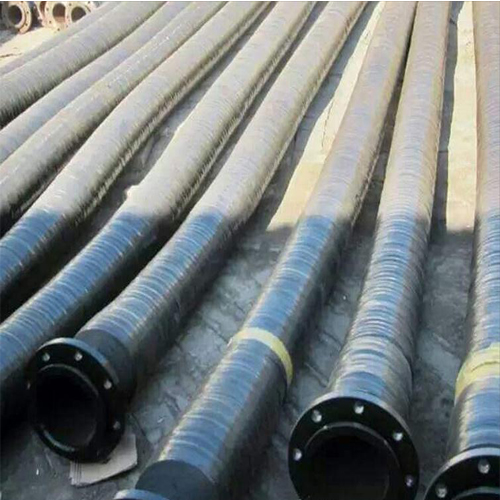
Nitrile rubber inner rubber layer of offshore oil hose is resistant to oil and high pressure for tra
1、 The "oil resistance code" of nitrile rubber inner layer: from molecular structure to medium compatibility
The inner rubber layer of offshore oil hoses directly faces the continuous erosion of crude oil and liquid petroleum products. The aromatic components contained in crude oil have a strong swelling effect on most common rubbers. If the inner layer lacks oil resistance, the material will experience volume expansion and significant decrease in mechanical strength within a few months.
The reason why nitrile rubber (NBR) has become the preferred material for the inner rubber layer of offshore oil hoses is due to the polar nitrile based structure in its molecular chain. This functional group endows nitrile rubber with natural resistance to non-polar mineral oil - when crude oil comes into contact with nitrile rubber, oil molecules find it difficult to penetrate between the rubber molecular chains, effectively suppressing the swelling and softening of the material. The high-performance product further adopts a composite formula of nitrile rubber and hydrogenated nitrile rubber (HNBR), which increases the saturation of molecular chains through hydrogenation treatment, while maintaining excellent oil resistance and enhancing resistance to high temperatures and acidic media.
For harsh working conditions such as deepwater oil and gas fields, the inner layer material can also be upgraded to a special HNBR formula to maintain stability in acidic media environments containing hydrogen sulfide and carbon dioxide, avoiding premature failure of the inner layer due to chemical erosion. The oil resistance of the inner rubber layer is also reflected in the temperature adaptability range of the medium - a typical offshore oil hose can transport crude oil from -20 ℃ to+82 ℃, covering the operating temperature difference from cold regions to tropical waters.
2、 Multi layer composite structure: integrated design for high pressure resistance and resistance to marine environments
Offshore oil hoses need to withstand internal pressure, dynamic bending, and marine environmental erosion simultaneously, relying on the system integration of a multi-layer structure of "inner rubber layer reinforcement layer outer rubber layer". The typical product structure consists of an inner adhesive layer, a fiber-reinforced layer, a steel wire reinforced layer, an outer adhesive layer, and end flanges.
The reinforcement layer is the core skeleton of the hose under pressure. Adopting a structural form of alternating winding or weaving of multi-layer high-strength polyester fiber cords and high-strength steel wires. The inner curtain is wrapped at a specific angle to provide radial support and resist the bulging deformation of the pipe body under high pressure; The outer steel cord is constructed at a lower angle to form an axial tensile skeleton, preventing the hose from excessively elongating under pressure pulses. This structure allows the working pressure of the hose to reach 15-40MPa, and the burst pressure is more than 2.5 times the working pressure. Some products also adopt a stainless steel armor outer layer design, which is tightly combined with rubber through 316L stainless steel armor tape, which can enhance mechanical strength and effectively resist chloride ion corrosion and external mechanical impact in deep-sea environments.
As the first line of defense against the marine environment, the outer rubber layer adopts a chloroprene rubber formula that is resistant to seawater erosion and weather aging. At the same time, anti ozone agents and anti ultraviolet absorbers are added to the formula to maintain elasticity and prevent cracking even after long-term exposure to high temperature, high humidity, and high salt spray marine environments. For the floating oil transfer hose between FPSO and shuttle tankers, a closed cell polyethylene foam floating layer can be embedded in the pipe body to enable the entire hose to float on the sea surface and reduce the oscillation caused by waves.
3、 Adaptation to marine oil transportation scenarios: from dynamic compensation to full cycle reliability
The core value of offshore oil hoses in offshore oil and gas extraction is reflected in the organic combination of high flow transportation capacity and adaptability to complex sea conditions.
In the scenario of FPSO crude oil export, the hose needs to be connected to the FPSO and shuttle tanker to maintain sealing during continuous relative motion caused by wind and waves. The multi-layer composite structure endows the hose with excellent flexibility - the inner diameter can reach 152mm or even larger diameters, while maintaining a small bending radius (such as the minimum bending radius of 2280mm for 152mm inner diameter specifications), which can absorb ± 3 meters of axial displacement and ± 5 degrees of angular deflection generated by ship motion.
In deepwater projects, products certified according to international standards such as API 17K have achieved full adaptability to all working conditions. They have been type approved by multiple international classification societies such as CCS, DNV, and ABS, and can operate stably in a wide temperature range of -40 ℃ to 120 ℃ and a chemical environment with a pH value of 2-13. The design life can reach more than 20 years. The end flange adopts an integral vulcanization embedding process, which forms molecular level adhesion between serrated metal inserts and rubber layers, so that the bursting pressure at the joint reaches more than 1.5 times the strength of the pipe body itself, effectively solving the industry problem of leakage in traditional flange connections.
In summary, the nitrile rubber inner rubber layer of offshore oil hoses perfectly meets the systematic requirements of "oil resistance, pressure resistance, and marine environment resistance" in marine oil and gas exploration, thanks to its polar nitrile molecular structure as an oil resistant barrier, multi-layer fiber/steel wire composite reinforced high-pressure bearing, and weather resistant outer rubber layer adapted to the marine environment. From a medium temperature range of -20 ℃ to 82 ℃ to a working pressure bearing capacity of 15-40MPa, from the export span of FPSO to the 20-year design life of deepwater projects, each layer of material selection and structural design is aimed at the same goal: to provide reliable guarantees for the safe transportation of crude oil and liquid petroleum products without swelling, leakage, and cracking in the ocean environment with wind and waves.