
In the fields of new energy vehicle cooling systems, commercial vehicle air brake pipelines, and industrial fluid transportation, the selection of pipeline materials directly affects system reliability and vehicle lightweighting level. Although traditional metal pipes are reliable under pressure, they are heavy, prone to corrosion, and require complex installation, gradually being replaced by high-performance engineering plastics. Nylon 11 (PA11) air brake tubing is a mature solution to this trend - it meets the requirements of air braking and cooling systems with a rated working pressure of 1.0MPa, achieves salt spray corrosion resistance with the low water absorption of PA11 material, and achieves lightweight goals with a density of only 1/7 of metal tubing. It has become a flexible channel in thermal management and pneumatic systems for new energy vehicles and commercial vehicles that combines "pressure resistance, corrosion resistance, and lightweight".
News
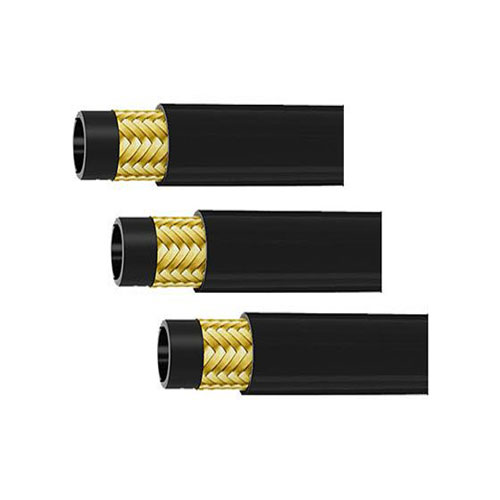
Cooling system nylon 11 air brake pipe pressure resistance 1.0MPa, salt spray resistance, lightweigh
1、 1.0MPa pressure benchmark: standard matching of air brake and cooling system
The pressure rating design of nylon 11 air brake pipes has clear standard basis. According to QC/T 80-2011 "Nylon (polyamide) pipes for road vehicle air brake systems" standard, nylon pipes are suitable for pipeline systems with a maximum working pressure of 1.0 MPa and a working temperature range of -40 ℃ to+100 ℃. This pressure level precisely covers the main circuit pressure of commercial vehicle air brake systems (usually 0.8-1.0MPa), while also meeting the requirements of new energy vehicle battery cooling systems (working pressure 0.3-0.8MPa).
For scenarios with higher pressure requirements, this standard also applies to pipeline systems with a maximum working pressure of 1.25 MPa, providing sufficient safety margins for system pressure fluctuations. In terms of size specifications, the nominal outer diameter of PA11 pipes covers 5mm to 16mm, and the wall thickness ranges from 1.0mm to 2.0mm, which can be flexibly selected according to flow and pressure requirements.
The circumferential strength of PA11 is ≥ 20MPa, ensuring that no creep or explosion occurs under a continuous working pressure of 1.0MPa. Its tensile strength reaches 47-58MPa, much higher than that of ordinary rubber pipes. It maintains dimensional stability under frequent pressure pulses in the air brake system and is less likely to cause joint loosening due to pressure fluctuations and "breathing effect".
2、 Salt spray resistance and weather resistance: chemical stability of PA11 in harsh environments
The reason why nylon 11 is suitable for cooling systems and air brake pipelines is rooted in its unique molecular structure - PA11 is polymerized from 11 amino undecanoic acid synthesized from castor oil, belonging to long carbon chain nylon (methylene number/amide number=10/1), with a lower density of amide groups than short chain nylon (such as PA6, PA66), and significantly reduced water absorption rate. The water absorption rate of PA11 is only 0.1% -0.4%, while the water absorption rate of PA66 can reach 1.5% -2.5%. Low water absorption brings direct salt spray resistance advantages - in humid or saline environments, water is not easily able to penetrate the pipe wall, causing material hydrolysis or internal metal joint corrosion.
In terms of chemical corrosion resistance, PA11 has excellent resistance to gasoline, diesel, lubricating oil, ethylene glycol based coolant, salt spray, acid rain, etc., and is suitable for chassis pipelines exposed to road salt spray environments. It has good arc resistance and electrolytic corrosion resistance, making it less prone to electrochemical corrosion due to electrolyte leakage when used as a coolant delivery pipe. PA11 material is resistant to UV aging and ozone, and has no cracking or performance degradation after thermal cycling testing from -40 ℃ to 100 ℃.
3、 Lightweight and wear-resistant characteristics: from easy installation to system integration
The lightweight advantage of nylon 11 air brake tubing is extremely significant - the density of PA11 is about 1.04g/cm ³, which is only 1/7 of steel (7.85g/cm ³). Based on the same length and pressure capacity of the pipeline, the weight of PA11 pipe is only 15% -20% of that of steel pipes of the same specification. According to relevant patented technologies, the weight of cooling pipes with nylon 11 outer layer is only 30% of traditional rubber pipes, which can meet the lightweight requirements of new energy vehicles and facilitate layout in compact battery pack spaces.
Wear resistance is another core advantage of PA11 in cooling and air braking systems. PA11 material itself has excellent wear resistance, with a smooth surface and low friction coefficient. It is not easily worn when pipelines are installed and pass through the frame holes, or when in long-term contact with other components. Its low-temperature impact performance at -40 ℃ is "non fracture", and it can maintain toughness even in extremely cold winter environments, making it less prone to brittle fracture due to external impact. PA11 pipes have a soft texture and are easy to bend, making them convenient for installation and wiring within the limited space of the vehicle chassis. When combined with sleeve type, bamboo buckle type, or quick change connectors, they can achieve fast and reliable pipeline connections.
In summary, nylon 11 air brake tubing, with its standard working pressure of 1.0MPa, salt spray resistance due to low water absorption, lightweight density of only 1/7 of metal tubing, and excellent wear resistance and low-temperature toughness, perfectly meets the systematic requirements of new energy vehicle cooling systems and commercial vehicle air brake tubing for "pressure stability, corrosion resistance and durability, lightweight and easy installation". From extreme cold of -40 ℃ to high temperature of+100 ℃, adapting to all climates, from chassis salt spray environment to flexible layout of battery packs, every material characteristic and design detail points to the same goal: replacing traditional metal pipelines with high-performance engineering plastics, providing lighter and more durable reliable guarantees for vehicle thermal management and pneumatic systems.