
In scenarios such as communication base stations, edge data centers, and outdoor energy storage stations, the flexible pipelines of the cooling system are exposed to the joint test of direct sunlight, ozone erosion, and extreme temperature differences all year round. Ordinary rubber hoses may experience surface cracking, hardening, and even leakage within a few months in such environments, becoming the "short lifespan" of outdoor liquid cooling systems. The wear-resistant and anti-aging EPDM coolant circulating hose is just the solution for this working condition - it realizes "ozone immunity" with a saturated molecular chain structure, delays weather aging with a double-layer protection system, and meets the outdoor safety specifications with a UL94 V-0 flame retardant rating. It has become a reliable guarantee for the base station liquid cooling system to "not crack and have a long life" in the wind and the sun.
News
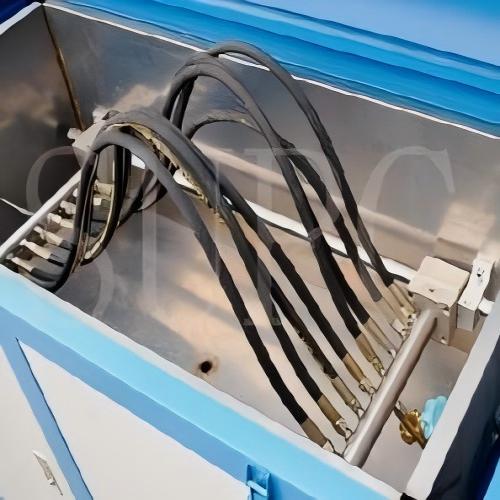
Wear resistant and anti-aging server, coolant circulating hose, applicable to outdoor base station
1、 Molecular code: How EPDM achieves outdoor 'ozone immunity'
The ozone resistance of rubber materials is rooted in the content of unsaturated double bonds in their molecular structure. Natural rubber (NR), nitrile rubber (NBR) and other rubbers with a large number of carbon carbon double bonds in the main chain can be directly attacked by ozone, which cuts off the molecular chain through the "ozone decomposition" mechanism and forms a typical turtle crack path on the material surface.
The reason why EPDM (ethylene propylene diene monomer) is suitable for long-term outdoor exposure scenarios is that its molecular main chain is completely composed of saturated carbon carbon single bonds, without double bonds that are susceptible to ozone attack. Its unsaturated double bond is "isolated" on the side chain, making it difficult for ozone to effectively attack the main chain, thus fundamentally endowing EPDM with excellent ozone resistance. Industry technical data shows that EPDM can withstand testing conditions that comply with ASTM D1149 standard (50pphm ozone concentration, 40 ℃, 150 hours) without cracking. This tolerance allows it to have a service life of more than 10 years in outdoor cabinets of communication base stations and other environments.
It is worth noting that outdoor applications are not facing a single aging factor, but rather the synergistic effect of ozone, ultraviolet radiation, and temperature and humidity changes. EPDM can still maintain relatively stable performance during this composite aging process, while nitrile rubber (NBR) is rated as "poor" under the same conditions. This difference directly determines whether the hose will remain unchanged for ten years or crack for a year in outdoor applications.
2、 Structural synergy: multi-layer protection from "ozone resistance" to "wear resistance"
The excellent anti-aging performance of EPDM material is the basis for the long life of the hose. However, the actual service environment of outdoor base station hose also includes multiple tests such as mechanical wear, sand dust friction and chemical media immersion. Therefore, the realization of "wear resistance and aging resistance" is the collaborative result of the three layers structure of the inner layer, reinforcement layer and outer layer.
The inner adhesive layer is a chemical barrier that comes into contact with the coolant. Using high-purity EPDM formula, it maintains chemical inertness towards water and water ethylene glycol based coolant, without swelling or precipitation. The adoption of peroxide sulfurization system abandons the traditional zinc oxide required for sulfur sulfurization, avoids the risk of zinc salt precipitation contaminating the coolant, and endows the inner layer with a denser cross-linked network, further reducing the permeation rate of water molecules and ozone molecules. EPDM has the ability to adapt to a wide temperature range of -40 ℃ to 150 ℃, which enables the hose to maintain stable physical properties in environments with severe temperature differences between winter and summer in outdoor cabinets of base stations.
The reinforcement layer is a pressure bearing skeleton. Adopting high-strength synthetic fiber weaving structure, the hose maintains dimensional stability under working pressure of 1.0-1.6MPa, and the bursting pressure can reach 3-4 times the working pressure. The polyester fiber reinforcement solution provides sufficient tensile strength while maintaining the flexibility of the hose - the small bending radius can reach about 3 times the diameter of the pipe, making it easy to flexibly lay pipes in narrow spaces inside cabinets or between equipment.
The outer layer is the core defense line against the external environment. Adopting EPDM synthetic rubber that is wear-resistant, ozone resistant, and UV resistant, the formula incorporates a "dual barrier" protection system of anti ozone agent and microcrystalline wax - chemical anti ozone agent continuously captures ozone during dynamic deformation, while microcrystalline wax migrates to the surface under static conditions to form a physical protective film, and the two work together. In addition, the outer coating has passed UL94 V-0 flame retardant certification and will self extinguish within 10 seconds in the event of an open flame without producing ignition droplets. Some products have also been validated for high insulation performance with a resistance greater than 1 megaohm per inch under 1000 volt DC conditions, meeting the safety requirements for outdoor electrical equipment.
3、 Communication base station adaptation: from selection to full link reliability
The outdoor deployment environment of communication base stations imposes multi-level requirements on cooling hoses. The YD/T 4525-2025 "Overall Technical Requirements for Liquid Cooling Systems of Communication Bureaus (Stations)" industry standard, released in 2025, specifies the pipeline materials, working conditions, and safety requirements for liquid cooling systems of communication base stations, providing a standardized basis for the selection of outdoor liquid cooling hoses.
The selection of environmental adaptability should focus on three aspects: firstly, the temperature range of the region where it is located, and the continuous working temperature of EPDM hoses from -40 ℃ to 120 ℃ is sufficient to cover the extreme climate conditions in the vast majority of regions in China; Secondly, the level of ozone concentration - the ozone concentration around urban or industrial base stations is usually higher, and the ozone resistance of EPDM gives it a significant advantage in these scenarios; Thirdly, the UV resistant formula of EPDM outer coating can effectively delay surface aging in terms of sunlight intensity and UV exposure duration.
The structural design and installation also affect the outdoor service life. After the hose processing is completed, the interior should be flushed to remove impurities, particles, and other pollutants; During installation, the number of bends should be reduced to ensure that the bends meet the requirements of the small bending radius of the hose, and to avoid excessive bending that may damage the reinforcement layer. For long-term fixed installation inside the cabinet, it is recommended to set pipe clamps at appropriate intervals to prevent friction and wear of the hoses during equipment vibration caused by wind.
In terms of full life management, the typical service life of EPDM hoses in outdoor liquid cooling scenarios can reach 5-7 years. During daily maintenance, it is important to check for cracks or wear on the outer coating, exposed reinforcement layer, and signs of leakage at the joints. When there are obvious cracks or hardening embrittlement in the outer coating, it should be replaced in a timely manner to avoid coolant leakage and equipment damage caused by pipe failure.
In conclusion, the wear-resistant and anti-aging EPDM coolant circulating hose perfectly meets the strict requirements of communication base stations and outdoor liquid cooling systems for "wear resistance, anti-aging and long life" with its three core technologies of "ozone immunity" gene of EPDM saturated molecular chain, double-layer protection anti-aging system, and safety guarantee of wide temperature range and flame retardancy. From a wide temperature range of -40 ℃ to 120 ℃ to UL94 V-0 flame retardant certification, from a 10-year service life under the synergistic aging of ozone and ultraviolet radiation to a flexible bending of three times the diameter of the pipe, every technical detail points to the same goal: to provide long-lasting protection for liquid cooling systems without cracking or leaking in outdoor base station environments that are exposed to wind, sun, cold, and heat.