In AI computing power clusters and high-density data centers, the power consumption of a single cabinet exceeding 50kW has become the norm, and traditional air cooling can no longer meet the cooling needs. The two-phase immersion liquid cooling technology has become the mainstream solution for ultra-high power density racks due to the efficient heat dissipation ability of fluorinated liquid phase change heat absorption. However, two-phase liquid cooling systems impose triple requirements on hoses that far exceed conventional standards: chemical stability to withstand long-term immersion in fluorinated liquids, wide temperature range tolerance to adapt to gas-liquid coexistence environments, and reliable flame retardant safety in electrical insulation media. The flame-retardant V0 level immersion coolant delivery hose is a professional product designed for this complex working condition. With its UL94 V-0 certified safety gene and material characteristics that are fully compatible with the coolant, it has become an indispensable "safety channel" in two-phase liquid cooling systems.
News
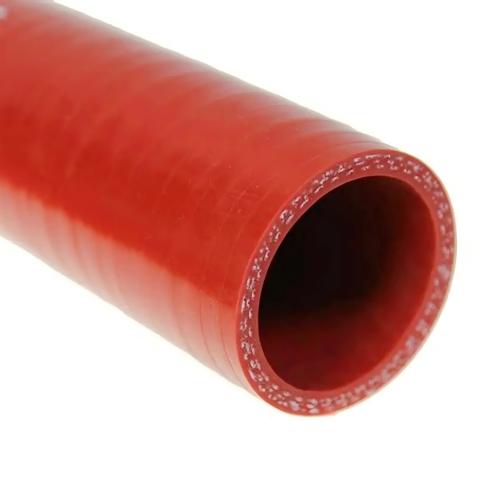
Flame retardant V0 level server immersion coolant delivery hose compatible with two-phase liquid coo
1、 The unique challenge of two-phase liquid cooling: from phase change mechanism to hose operating conditions
The working principle of two-phase immersion liquid cooling is to directly immerse the server in a low boiling point fluorinated liquid. The heat causes the fluorinated liquid to boil and vaporize, and then the vapor is condensed back to the liquid state through a condenser, forming a cycle of "liquid heat absorption → vapor heat dissipation → condensation reflux". This cycle creates a medium environment where gas-liquid two-phase coexistence always exists in the system, posing a dual challenge to the hose.
In the high-temperature gas reflux section, fluorinated liquid vapor flows through a hose before condensation, with a temperature close to the boiling point (usually 40-100 ℃), and gas molecules have stronger permeability than liquids, requiring higher chemical stability and impermeability of the hose material. In the low-pressure liquid delivery section, the fluorinated liquid is in a saturated state close to its boiling point, and any small leakage in the pipeline may cause cavitation or system pressure fluctuations. In addition, as an insulating medium, fluoride solution needs to have a breakdown voltage greater than 40kV/mm, and the hose is required not to release any conductive ions or particulate pollutants into the coolant.
CEJN liquid cooled hoses emphasize their full compatibility with commonly used cooling fluids and have undergone comprehensive testing for typical cooling fluids such as PG-25. They can stably cover various scenarios such as direct liquid cooling, cooling distribution units, and immersion cooling.
2、 V0 level flame retardant safety core: from material certification to system protection
In an immersion liquid cooling system, the hose is completely immersed in fluorine liquid or exposed to a sealed space filled with coolant vapor. Once an electrical fault occurs and sparks are generated, the hose itself must not become a path for the spread of fire. UL94 V-0 certification is a rigid safety barrier designed to address this risk - the test requires the material to self extinguish within 10 seconds after opening the fire source in a vertical combustion state, without producing molten droplets that ignite the degreased cotton.
CEJN liquid cooled hoses explicitly list "UL 94 V0 flame retardant material" as one of their core characteristics. Its reinforced EPDM material not only meets flame retardant requirements, but also has high flexibility and bending resistance, which can maintain stable flow in small or complex installation spaces. The hose is also reinforced with high-strength synthetic fiber yarn to ensure good dimensional stability under compression, forming a complete safety link from the pipeline to the interface with liquid cooled quick couplings of the same brand.
According to a report on the data center cooling hose industry, flame retardancy has become a core indicator for selecting liquid cooling hoses. By 2025, the global production of data center cooling hoses has reached 3224 kilometers, and with the accelerated deployment of AI computing power clusters, the proportion of V0 level flame retardant hoses is rapidly increasing.
3、 Two phase liquid cooling full chain adaptation: from medium compatibility to scene collaboration
The adaptation requirements for hoses in two-phase liquid cooling systems are full chain - not only to meet single point performance, but also to form a coordinated and stable whole with coolant, joints, and seals.
Coolant compatibility is the threshold for selection. Two phase immersion liquid cooling commonly uses electronic fluorinated liquids (such as 3M Fluorinert, Novec series, or Fluolase), which have different boiling points, dielectric constants, and chemical activities, which constrain the selection of hose materials. Industry standards clearly state that EPDM or butyl rubber should be selected as the elastic sealing material for fluorinated liquid delivery systems. CEJN liquid cooled hoses have completed compatibility verification for various commonly used cooling fluids such as PG-25, ensuring that their performance does not deteriorate due to medium erosion during long-term operation.
In terms of temperature and pressure adaptation, the operating temperature of a two-phase liquid cooling system depends on the boiling point of the fluorinated liquid, usually falling within the range of 40-100 ℃. The working temperature of CEJN liquid cooled hoses covers -40 ℃ to+100 ℃, and the working pressure reaches 10 bar (about 1MPa), which is sufficient to meet the circulating pumping pressure requirements of two-phase liquid cooling systems. At the installation scenario adaptation level, CEJN hoses are typically used for direct liquid cooling circuits in data center cooling distribution units (CDUs) and server cabinets. Their high flexibility facilitates the passage of branch pipelines densely distributed inside the cabinets, while forming a "plug and play" connection solution with standardized quick connectors such as UQDs, greatly reducing the complexity of on-site installation and later maintenance.
In summary, the flame-retardant V0 level server immersion coolant delivery hose, with its UL94 V-0 certified flame retardant safety guarantee, EPDM material fluorine liquid full compatibility characteristics, and fiber-reinforced pressure resistant and flexible dual excellent structure, perfectly meets the strict requirements of "safe flame retardancy, medium compatibility, and thermal stability" for two-phase immersion liquid cooling systems. From the chemical stability of fluorinated liquid phase transportation to the anti-seepage sealing of steam circuits, from the flexible piping of narrow cabinets to the standard matching of CDU and quick connectors, every technical detail points to the same goal: to provide safe, reliable, and long-life flexible transportation guarantee for two-phase immersion cooling systems in the AI computing power index level rising liquid cooling era.