
In modern industrial fields such as chemical production, electroplating processing, metallurgical smelting, and environmental desulfurization, the transportation of corrosive media such as strong acids and alkalis imposes extremely stringent requirements on pipeline materials. Under the continuous erosion of concentrated sulfuric acid, hydrochloric acid, or sodium hydroxide solutions, ordinary rubber hoses can experience swelling, hardening, and even perforation and leakage of the inner rubber layer within a few weeks. The chemical large-diameter hose lined with Teflon (PTFE) is a professional solution developed specifically to address this pain point - it utilizes PTFE's "chemical inertness" as the core barrier, constructs a pressure-bearing skeleton with a stainless steel wire braided/wound layer, and employs a rubber-coated outer layer to resist external environmental erosion, becoming the "anti-corrosion" solution in the field of chemical fluid transportation.
News
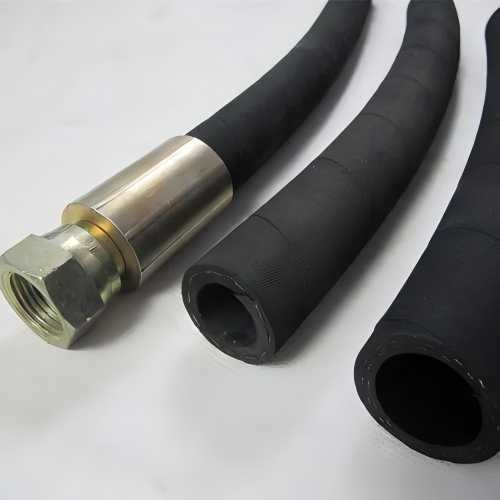
Chemical industry large-diameter hose, resistant to strong acids and alkalis, lined with Teflon, and
1. Teflon lining: a chemically inert "atomic-level barrier"
The reason why polytetrafluoroethylene (PTFE, commonly known as Teflon) has become the lining material for hoses resistant to strong acids and alkalis lies in its unique molecular structure. PTFE molecules are composed of carbon-fluorine bonds, and the extremely high electronegativity of fluorine atoms forms a dense "electronic protective shield" around the carbon chain, making almost all chemical molecules unable to react with it. This chemical inertness enables PTFE to withstand long-term erosion from concentrated sulfuric acid, hydrochloric acid, hydrofluoric acid, nitric acid, sodium hydroxide solution, and various organic solvents, and it rarely reacts with any chemical medium.
In terms of material performance, PTFE lining exhibits multidimensional technical advantages. In terms of temperature resistance, PTFE hoses can operate within a temperature range of -70℃ to +260℃, which enables them to withstand the risk of embrittlement from low-temperature liquids and handle the medium transportation in high-temperature reactors. The smooth inner wall characteristic results in an extremely low friction coefficient (one of the lowest among solid materials), which not only reduces fluid transportation resistance but also effectively prevents medium adhesion and crystallization on the inner wall of the tube, making it particularly suitable for the transmission of high-purity fluids or easily crystallizing media. Some high-end products adopt a shallow spiral or corrugated inner wall structure, which further enhances the flexibility of the hose while ensuring sufficient flow.
It is worth mentioning that for the pharmaceutical, semiconductor, and cosmetics industries with high purity requirements, specialized PTFE hoses have obtained international certifications such as USP Class VI and FDA 21 CFR 177.2600, ensuring that the lining does not decompose any odor or taste into the fluid medium, meeting the stringent specifications for CIP/SIP online cleaning and sterilization. As one of the few manufacturers ensuring a lining thickness as thin as 1.5mm, AFlex ensures that the tubing possesses sufficient compressive strength, eliminating the risk of increased porosity and premature rupture caused by changes in cross-section due to internal pressure.
II. Multi-layer composite structure: system integration from lining to cladding
The excellent performance of large-diameter chemical hoses not only relies on the chemical stability of the PTFE lining, but also stems from the systematic integration of the three-layer structure of "lining-reinforcement layer-outer coating".
The reinforcement layer serves as the core skeleton for the hose to withstand high-pressure pulses and negative pressure suction. Depending on the pressure rating, the reinforcement layer commonly employs a multi-layer braided/wound structure made of SS304 or SS316L stainless steel wire. The specification selection of stainless steel wire directly impacts corrosion resistance: when transporting highly corrosive media such as hydrochloric acid and chlorine gas, the use of a Hastelloy braided layer can significantly reduce the risk of corrosion to the outer braided layer caused by PTFE gasket diffusion, with a decrease in burst pressure and working pressure by 80% compared to ordinary stainless steel braided layers. The reinforcement layer can be designed as a single-layer or multi-layer structure - taking a 51mm inner diameter specification as an example, a four-layer steel wire braided structure can achieve a working pressure of 23bar, a burst pressure of 95bar, and a vacuum degree of 0.91bar.
The outer coating serves as the first line of defense against external environmental erosion and mechanical damage. Depending on the application scenario, the outer coating offers multiple options: transparent silicone coating is suitable for pharmaceutical and food applications that require high-temperature steam sterilization, with a working temperature range of -60°C to +180°C; EPDM (ethylene propylene diene monomer) rubber coating, with its excellent weather resistance, ozone resistance, and UV resistance, has become a standard configuration for outdoor installations in chemical plants; for explosion-proof areas with electrostatic risk, conductive fibers can be added to the PVC coating layer to impart anti-static properties to the hose.
End connection is also a crucial aspect in ensuring system sealing. Large-diameter chemical hoses are typically equipped with 316L stainless steel flange connectors, TC clamp connectors, or threaded connectors at both ends, forming a seamless connection between metal and PTFE with the crimping process. The flange material is selected as SS316L, and the surface undergoes precision machining to ensure the flatness of the sealing surface. Coupled with PTFE gaskets or O-rings, it maintains long-term sealing effectiveness even in strong acid and alkali media. According to customer needs, international standard connectors such as SMS and DIN can also be customized to achieve rapid docking with existing pipelines.
III. Chemical industry application: full coverage from chemical plants to environmental desulfurization
The PTFE-lined hose resistant to strong acids and alkalis is widely used in various scenarios with stringent requirements for chemical stability, and its large-diameter specifications are particularly suitable for the transportation of high-flow media.
The transportation of chemical raw materials is a core application scenario. Between the raw material tank area and the reaction kettle, corrosive media such as concentrated sulfuric acid, hydrochloric acid, and liquid alkali need to be loaded, unloaded, and stored through flexible pipelines. Taking a pharmaceutical chemical plant as an example, it uses hoses lined with PTFE and coated with a polypropylene braided layer to transport high-concentration hydrochloric acid and sulfuric acid. The working pressure reaches 10 bar, and the hoses are required to meet the ATEX explosion-proof area certification and material 3.1 certificate requirements. For the electroplating and surface treatment industries, such hoses are used in the circulation systems of acid pickling solutions and electrolytes, enduring long-term erosion from mixed acids without causing lining degradation.
Flue gas desulfurization (FGD) system is an important application field that has developed rapidly in recent years. In desulfurization devices of coal-fired power plants and steel plants, limestone slurry and by-product gypsum slurry have strong abrasiveness and moderate corrosivity. Large-diameter PTFE-lined hoses, with their smooth inner walls and corrosion resistance, can effectively prevent scaling and blockage, ensuring the continuous and stable operation of the desulfurization system.
In the mining and metallurgical industries, leachate, extractant, and stripping solution in the hydrometallurgical process are mostly strong acid or strong alkaline media. Large-diameter PTFE-lined hoses with an inner diameter ranging from 152mm to 305mm can serve as flexible connectors between leach tanks and extraction towers, withstanding dynamic bending while resisting media corrosion. Their spiral steel wire reinforcement structure endows the hoses with excellent negative pressure resistance, achieving a vacuum degree of up to 0.91 bar, making them suitable for suction conditions at the pump inlet end.
The pharmaceutical and biotechnology fields have extremely high requirements for the cleanliness of hoses. The Pharmaline ultra-clean Teflon hose adopts an inner lining structure design, with a slightly uneven inner wall but a spiral groove on the outer wall. Combined with embedded stainless steel wires, it significantly enhances the hose's flexibility and kink resistance. The outer coating is made of platinum vulcanized silicone rubber, which can withstand repeated high-pressure steam sterilization without aging. The gold-plated hose typically has an inner diameter of 1.5 to 2 inches and is used for solvent delivery, meeting all requirements, including the EN16643:2016 standard.
The key points of installation and maintenance also merit attention. Although PTFE-lined hoses exhibit excellent chemical stability, it is still important to note during installation that the bending radius should not be less than the specified minimum value (typically 5-10 times the pipe diameter) to avoid excessive bending that could lead to cracking of the PTFE lining. In situations where there is a risk of static electricity, models with conductive/antistatic lining or outer coating should be selected to ensure proper grounding. During routine inspections, focus should be placed on whether the outer coating is damaged, whether there are leaks at the joints, and whether the hose exhibits any abnormal deformation. If the PTFE lining shows signs of wrinkling or perforation, it should be replaced promptly.
IV. Summary
In summary, the large-diameter chemical hose lined with Teflon (PTFE) perfectly meets the stringent requirements of industries such as chemical, electroplating, metallurgy, and environmental protection for "resistance to strong acids and alkalis, high and low temperature tolerance, negative pressure resistance, and long service life" through its three-in-one technological integration of "chemical inert lining + stainless steel wire reinforced skeleton + rubberized weather-resistant outer coating". From -70℃ deep cold to +260℃ high temperature, from concentrated sulfuric acid to liquid alkali, from pure chemical solutions to corrosive solvents, this "chemical blood vessel" carries the safe mission of industrial fluid transportation with its excellent chemical stability and mechanical strength.
With the development of chemical production towards refinement and continuous processes, coupled with increasingly stringent environmental emission standards, the technical value of PTFE-lined large-diameter hoses will continue to be highlighted. Higher pressure ratings, wider diameter ranges, and more intelligent life monitoring systems will be the key directions for future technological breakthroughs.