
In heavy industry fields such as mining beneficiation, tailings transportation, and metallurgical smelting, the transportation of high concentration slurry poses a dual requirement for pipelines to be both pressure resistant and wear-resistant. The slurry medium contains high hardness particles such as quartz sand and metal debris, which continuously cut the pipe wall under a working pressure of 1.5 MPa; The sealing reliability of pipeline connections is directly related to production safety and environmental compliance. The large-diameter wear-resistant slurry hose with a working pressure of 1.5MPa and flange joints at both ends is a professional product designed for this working condition. It has become the "wear-resistant artery" in the field of slurry transportation with a three in one technical system of "high wear-resistant lining+multi-layer steel wire reinforcement+standard flange connection".
News
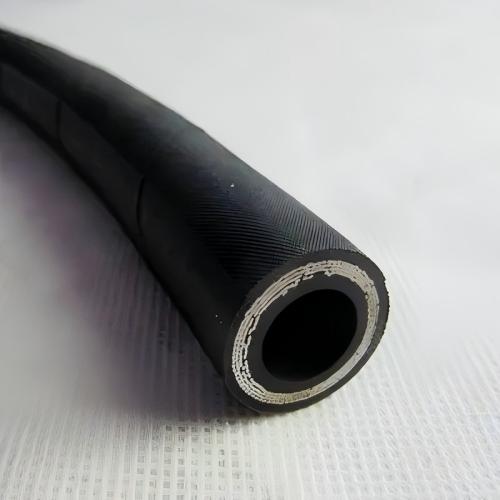
Large caliber wear-resistant slurry rubber hose with working pressure of 1.5MPa and flange joints at
1、 The material revolution of wear-resistant inner layer: a leap from rubber to UPE
The challenge of slurry transportation lies in the high abrasiveness of the medium. The tailings slurry discharged from beneficiation processes such as iron ore, copper ore, and gold ore can have a solid particle concentration of up to 40% -60%, and the particle hardness is generally above Mohs 6, forming a dual wear of "cutting" and "impact" on the inner wall of the hose. Traditional rubber lining usually wears through in hundreds of hours under such working conditions.
In response to this pain point, modern large-diameter wear-resistant slurry rubber hoses have achieved a qualitative breakthrough in the lining material. Ultra high molecular weight polyethylene (UPE) lining is one of the current solutions. The molecular weight of UPE is over 3 million, and its wear resistance is 7 times that of ordinary carbon steel and 4 times that of nylon. It performs particularly well when transporting slurry containing hard particles such as quartz sand. Taking the application of transporting acidic slurry with pH value of 2-3 in a copper mine enterprise as an example, the wear rate of UPE lining is only 0.03mm/thousand hours, and the service life can reach 8-10 times that of ordinary rubber pipes.
For conventional working conditions that do not require UPE extreme wear resistance, high wear resistant synthetic rubber lining also performs well. The inner rubber layer adopts a blend formula of natural rubber (NR) and nitrile rubber (NBR), reinforced by adding high wear-resistant silicon carbide particles with a particle size of 50-100 μ m. The Shore hardness is controlled at 65 ± 5 Shore A, and the wear resistance is improved by 300% compared to ordinary rubber hoses while maintaining good elasticity. Under typical operating conditions with a mud concentration of 50% and a flow rate of 3m/s, the service life of such lining can reach over 800 hours.
The large-diameter design covers a wide range of DN150mm to DN600mm, meeting the high flow transportation needs of mining beneficiation plants, tailings ponds, and other scenarios. The smooth inner wall not only reduces fluid transport resistance, but also effectively prevents solid particles in the slurry from depositing and scaling on the inner wall.
2、 Mechanical support and structural design for a pressure rating of 1.5MPa
The working pressure of 1.5MPa is a typical pressure level for mining slurry transportation, suitable for scenarios such as slurry circulation, tailings discharge, and medium to long distance pumping in mineral processing plants. To achieve reliable pressure bearing at this pressure level, system design needs to be carried out from two dimensions: the reinforcement layer and the end connection.
The multi-layer composite structure of the reinforcement layer is the core guarantee for the pressure bearing capacity of the hose. Large caliber wear-resistant slurry rubber hoses generally adopt a composite structure of "inner rubber layer multi-layer fiber/steel wire reinforcement layer spiral steel wire skeleton outer rubber layer". Among them, the reinforcement layer is made of multiple layers of high-strength polyester cord or steel wire woven/wound, with a tensile strength exceeding 2500MPa. The number of layers can be flexibly configured according to pressure requirements, ensuring that the blasting pressure reaches more than 4 times the working pressure and meets the internationally recognized safety factor requirements of 3:1 to 4:1. For working conditions that require negative pressure suction (such as the pump suction end), a high-strength spiral steel wire skeleton with a diameter of 5.0mm is also implanted in the pipe wall to provide continuous radial support, allowing the hose to withstand negative pressure of 80-90Kpa under vacuum conditions without collapsing.
The outer rubber layer serves as a line of defense against external environmental erosion, using weather resistant chloroprene rubber (CR) or chlorosulfonated polyethylene (CSM) with a thickness of 2-4mm. The surface can be pressed with anti slip patterns or coated with polyurethane wear-resistant bands to resist rock friction and UV aging in mining environments. Adding anti ozone agents and anti UV absorbers to the outer layer formula ensures good elasticity and protective performance even under long-term exposure in open-pit mines.
The temperature adaptation range covers from -30 ℃ to+100 ℃, and can adapt to a wide temperature range from low-temperature environments in winter in the north to high-temperature conditions in the south. The overall structural design allows the hose to have both the compressive strength of a "hard wall" and the flexibility of a "soft wall", and can be flexibly selected according to installation needs.
3、 Reliability and installation convenience of flange joints at both ends
In large-diameter slurry conveying systems, the reliability of end connections is the "throat" of the entire pipeline system. The large-diameter wear-resistant slurry rubber hose with flange joints at both ends has become a standard configuration for mining beneficiation plants, tailings ponds, and dredging projects due to its advantages of high connection stiffness, reliable sealing, and easy disassembly and assembly.
The material and process of the flange are the foundation for ensuring the strength of the connection. The flange is made of Q235B carbon steel or SS304 stainless steel, which complies with GB/T 9119 and ANSI B16.5 standards. Flange thickness ≥ 12mm, bolt hole spacing tolerance controlled within ± 0.5mm, sealing surface roughness Ra ≤ 3.2 μ m, ensuring sealing reliability under a working pressure of 1.5MPa. In the humid and dusty environment of mines, the flange surface is treated with galvanized or epoxy resin coating, which can withstand salt spray corrosion for more than 1000 hours, effectively preventing connection failure caused by joint corrosion.
The sealing structure adopts O-ring or metal wrapped gasket design, combined with precision machining of the flange sealing surface, which can achieve zero leakage operation under a working pressure of 1.5MPa. For working conditions with high pressure or significant pulse fluctuations, some products also adopt a secondary sealing structure to further improve sealing reliability.
Installation efficiency and maintenance convenience are prominent advantages of large-diameter hose flange connections. Traditional steel pipe connections require section by section welding or flange docking, and a single connection takes several hours; And with large-diameter rubber hoses and flange joints, installation can be completed within 30 minutes, and disassembly and maintenance are also convenient. In tailings discharge outlets or maintenance areas of beneficiation plants that require frequent replacement of hoses, this feature significantly reduces downtime.
The detachable flange technology further enhances the flexibility of the connection. The utility model (CN213145710U) discloses a detachable combined flange joint design - the flange is composed of multiple flange bodies, which are fixed by connecting fasteners and can be removed from the worn hose body for reuse, avoiding the waste of flange joints. This design allows the hose to be cut on-site according to installation needs, especially suitable for slurry conveying scenarios with uncertain length and size that require quick installation.
In terms of application scenarios, the large-diameter wear-resistant slurry hose with a working pressure of 1.5 MPa and flange joints at both ends is widely used in the slurry circulation system of mineral processing plants (DN300mm specification can transport a flow rate of up to 300m ³/h), tailings pond discharge pipelines, slurry transportation in metallurgical smelting, and suction operations in dredging projects.
4、 Summary
In summary, the large-diameter wear-resistant slurry hose with a working pressure of 1.5 MPa and flange joints at both ends perfectly meets the stringent requirements of "wear-resistant, pressure stable, and fast connection" in mining slurry transportation, thanks to its UPE/high wear-resistant rubber lining wear-resistant design, multi-layer steel wire/fiber reinforced pressure bearing skeleton, and reliable sealing with standard flange connections. From the 8-fold lifespan of UPE lining to the 30 minute quick installation of flange joints, from the ample redundancy of 4-fold safety factor to the wide temperature range adaptation from -30 ℃ to+100 ℃, every technical detail points to the same goal: to provide 100% reliable flexible conveying guarantee for mining production in the roar of ore crushing and on the winding pipeline of tailings conveying. With the development of mining towards deeper and higher concentration areas, the technical value of large-diameter wear-resistant slurry hoses will continue to be highlighted, becoming an indispensable core equipment for modern mining and metallurgical systems.