
In operations such as oilfield gathering and transportation, refinery dumping, oil depot loading and unloading, and ship fuel oil transportation, large-diameter hoses are responsible for efficiently transferring hydrocarbon media such as crude oil and fuel oil. This type of medium has a strong swelling effect on ordinary rubber. If the oil resistance of the inner rubber layer is insufficient, volume expansion, mechanical strength decrease, and even leakage failure can occur within a few weeks. The large-diameter oil resistant rubber hose with a working pressure of 1.0MPa is a professional product designed for this working condition - it is constructed with a high nitrile nitrile rubber lining to form an anti swelling barrier, and is reinforced with multiple layers of fibers/steel wires to carry the rated pressure. It is designed with conductivity/anti-static to eliminate safety hazards and has become a "reliable vessel" in the field of hydrocarbon medium transportation.
News
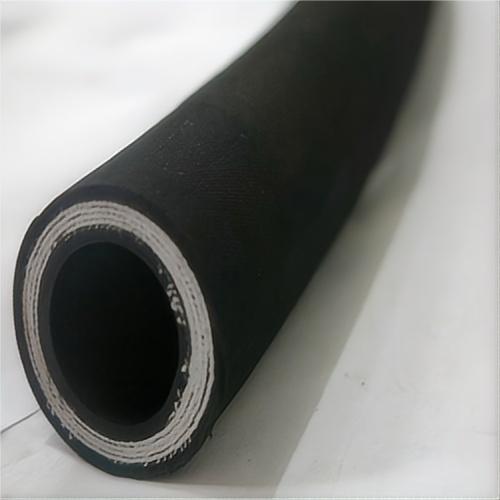
Large-diameter oil-resistant rubber hose, resistant to swelling, suitable for conveying crude oil an
1、 Oil resistant password: anti swelling barrier constructed by high nitrile nitrile rubber
The swelling effect of hydrocarbon media such as crude oil, diesel, and fuel oil on rubber materials originates from the principle of similar solubility between non-polar oil molecules and rubber molecular chains. Swelling not only causes the volume expansion and sealing failure of the inner rubber layer, but also significantly reduces the tensile strength and wear resistance of the rubber. Therefore, the oil resistance of the inner rubber layer is the primary factor determining the service life of large-diameter oil hoses.
According to the requirements of HG/T 3041-2009 "Rubber hoses and hose assemblies for fuel tank truck transportation" standard, the rubber hose inner layer for transporting hydrocarbon fuels is made of nitrile rubber (NBR) formula, which can withstand fuel media with aromatic hydrocarbon volume content not exceeding 50% and oxygen-containing compound content up to 15%. Modern high-performance products further increase the acrylonitrile content to 42% -45% - as a polar group, the higher the acrylonitrile content, the weaker the interaction with non-polar oil molecules, and the better the oil swelling resistance. Laboratory data shows that after soaking in ASTM Oil No.3 standard oil for 168 hours, the volume expansion rate of the material is only 6.8%, while that of ordinary NBR is 15% -20%.
According to the different characteristics of the conveying medium, the inner rubber layer material of large-diameter oil resistant hoses can be flexibly selected: high nitrile NBR is used for conventional crude oil and fuel oil conveying, which can withstand a temperature range of -30 ℃ to+100 ℃; For sulfur-containing crude oil or acidic media, the corrosion rate of hydrogen sulfide can be reduced to 0.008mm/year by adding sulfur carriers and anti-aging agent 4020; For gasoline containing alcohol additives, fluororubber (FKM) or special composite formulations should be selected to enhance tolerance.
2、 Structural skeleton: multi-layer reinforcement and mechanical support with a working pressure of 1.0MPa
The working pressure of 1.0MPa is a typical pressure level specified in standards such as HG/T 3041 and GB/T 24146, and is suitable for scenarios such as loading and unloading of oil tankers, oil depot dumping, and industrial fuel transportation. To achieve reliable pressure bearing at this pressure level, system design needs to be carried out from two dimensions: the reinforcement layer structure and the end connection.
The reinforcement layer is the core skeleton of the hose to withstand internal pressure. According to different pressure levels and diameters, large-diameter oil resistant hoses usually adopt fiber weaving/winding or steel wire weaving structures. The fiber weaving scheme uses 1-2 layers of high-strength polyester cord or synthetic fibers, which are cross woven at specific angles to make the hose both lightweight and flexible. For scenarios that require a higher safety factor, the steel wire weaving scheme provides stronger pressure protection - the small burst pressure is 4 times the working pressure, which meets international safety standards. Taking Litong Technology's 2-inch UPE hose as an example, it is reinforced with 4 layers of high-strength steel wire, with a working pressure of 2.5MPa and a burst pressure far exceeding the required working pressure.
The reliability of end connections cannot be ignored. Large diameter oil hoses are usually equipped with carbon steel flange joints or API union joints at both ends, which are connected to the pipe body through crimping technology. The flange sealing surface adopts a concave convex surface+metal wrapped gasket structure, with extremely low leakage rate under a working pressure of 1.0MPa, meeting the sealing requirements of API 6A standard. The surface of the carbon steel joint has undergone anti-corrosion treatment and can adapt to the humid and salt spray environment in outdoor oil depots and dock loading and unloading areas.
The design of electrostatic discharge is the safety bottom line for the transportation of hydrocarbon media. When crude oil and fuel oil flow at high speed in pipelines, if the static electricity generated by friction cannot be guided away in time, it may cause spark discharge and lead to fire or explosion. Large diameter oil resistant hoses are equipped with conductive carbon black (surface resistance ≤ 10 ⁶ Ω) or built-in anti-static guide wires in the inner rubber layer to ensure the safe introduction of static charges into the ground. This design complies with the API RP 2003 anti-static standard and ATEX explosion-proof certification requirements.
3、 Application scenarios and maintenance: Full coverage from oil depot loading and unloading to ship fuel
Large diameter oil resistant rubber hoses with a working pressure of 1.0MPa are widely used in the transportation of hydrocarbon media such as crude oil, fuel oil, and diesel. Its typical applications include tank truck loading and unloading systems - according to HG/T 3041 standard, this type of hose is specifically designed for loading and unloading fuel in tank trucks, with a working temperature range of -30 ℃ to+70 ℃ and a static storage temperature of up to -50 ℃. At oil field gathering stations, hoses with a diameter of DN100 or above are used to connect the Christmas tree to the metering room, and are resistant to corrosion and erosion from sand and sulfur-containing crude oil. At the oil depot terminal, large-diameter hoses serve as flexible connectors for loading and unloading arms between ships and shore tanks, and must adapt to displacement and tension caused by tidal changes.
Working condition adaptation is the primary consideration in selection. The transportation of crude oil should focus on the sulfur and sand content, and choose an internal rubber formula that balances corrosion resistance and wear resistance; Fuel oil (such as heavy oil and marine fuel) has high viscosity and temperature, and it is necessary to ensure that the hose maintains stable pressure bearing capacity under working conditions of 80-100 ℃. According to the GB/T 24146-2022 standard, the oil temperature of 1.0MPa grade hoses used for oil burners can reach 100 ℃.
The key points of installation and maintenance are equally worthy of attention. Large diameter oil resistant hoses should avoid twisting during installation, and the bending radius should not be less than the specified minimum value (usually 5-8 times the pipe diameter). It is recommended to check the outer adhesive layer for bulges, joint bolts for looseness, and inner walls for obvious swelling every 200-500 hours. For hoses equipped with conductive design, the grounding conductivity should be tested regularly to ensure effective anti-static function. When the outer diameter change rate exceeds 5% or the inner adhesive layer cracks, it should be replaced in a timely manner.
Regulatory compliance is an essential aspect of product selection that cannot be ignored. The hoses used for loading and unloading oil tanker trucks shall comply with the requirements of HG/T 3041-2009 standard; The hose used for the oil burner system shall comply with the national standard GB/T 24146-2022; The hose assembly for transporting hydrocarbon media should pass API 7K certification and explosion-proof certification. These standards collectively constitute the quality and safety standards for large-diameter oil resistant hoses.
4、 Summary
In summary, the large-diameter oil resistant rubber hose with a working pressure of 1.0 MPa perfectly meets the stringent requirements of "swelling resistance, pressure stability, and anti-static" for crude oil and fuel oil transportation, thanks to its high nitrile nitrile rubber lining anti swelling design, multi-layer fiber/steel wire reinforced pressure bearing skeleton, and conductive/anti-static safety guarantee. From oil tanker loading and unloading to oil depot dumping, from oil field gathering and transportation to ship fuel transportation, this "oil resistant vessel" carries the fluid lifeline of safe transportation of hydrocarbon media with its standardized pressure rating and customized material selection, providing a solid flexible guarantee for the efficient operation of the petrochemical industry.